Boxi Xia
Postdoctoral Associate, Duke University
I'm working toward robots that can carry out long, precise physical tasks reliably. I design and build the hardware, train the control in simulation, and run it on real robots. The projects below are the pieces I've built so far. Next is putting them together into robots that run multi-step tasks from start to finish.
I work in the General Robotics Lab at Duke with Prof. Boyuan Chen. I did my Ph.D. in the Creative Machines Lab at Columbia with Prof. Hod Lipson, and before Duke I built learned locomotion controllers for quadrupeds at PX Robotics.

News
- Sep 2026Our planetary mobility paper won the Best Paper Award at the Space Robotics Workshop at IROS 2026 in Pittsburgh. At the main conference I chaired one manipulation session and co-chaired another.
- Sep 2026Released three preprints: the Cartesian Hand, Duke Humanoid v2, and MARBLE, an amphibious rolling robot.
- May 2026Argus published in Science Robotics. AP, Fortune, and IEEE Spectrum were among the outlets that covered it.
Older news
- 2026Nominated for Duke's 2026 Outstanding Postdoc Award (24 nominees among 650 postdocs).
- May 2026Filed a PCT patent application for Argus and a U.S. provisional application on robot tooling for laboratory automation.
- Sep 2025Duke Humanoid presented at IROS 2025.
- May 2025Text2Robot presented at ICRA 2025, and a U.S. provisional patent application filed for Argus.
- 2024Text2Robot received the Innovation Award in the ALIFE 2024 Virtual Creatures Competition.
Research
* equal contribution
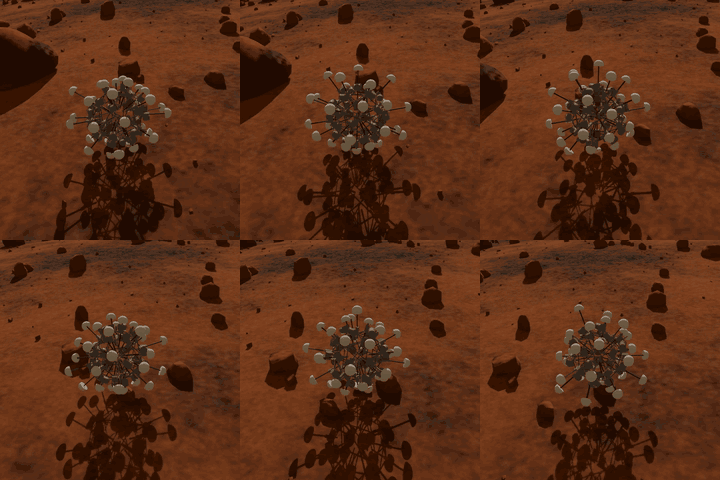
Dynamic Symmetry for Orientation-Independent Planetary Mobility
IROS 2026 Space Robotics Workshop
Best Paper Award
Planetary mobilityApplies dynamic symmetry to planetary surfaces: zero-shot trajectory tracking on simulated Mars and Moon terrain under reduced gravity.
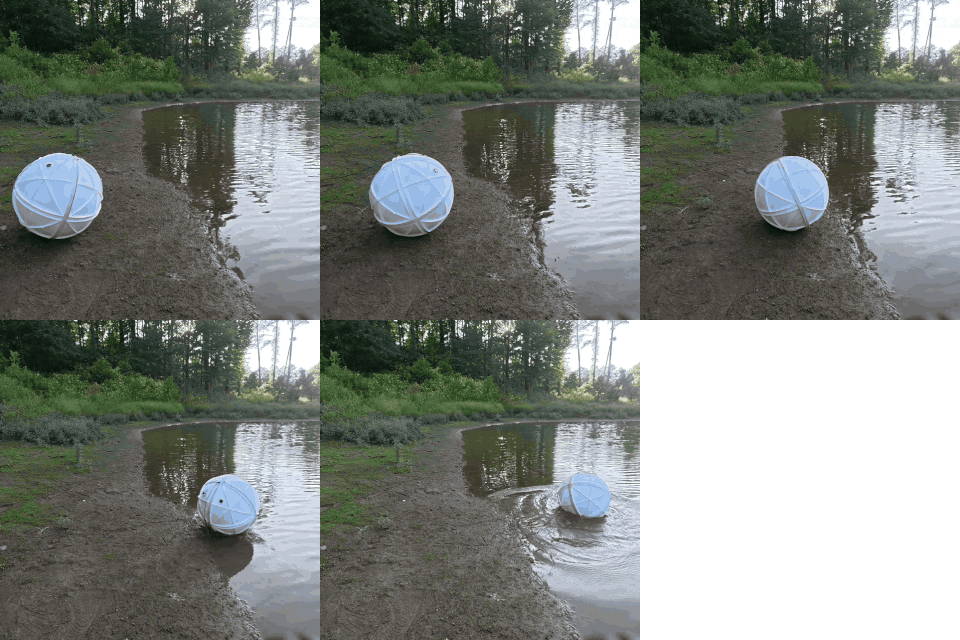
Omnidirectional Amphibious Locomotion via Internal Mass Actuation
arXiv preprint, 2026
Field roboticsA sealed spherical robot that rolls on land and moves across water by shifting three internal masses, with no separate drive for each medium.
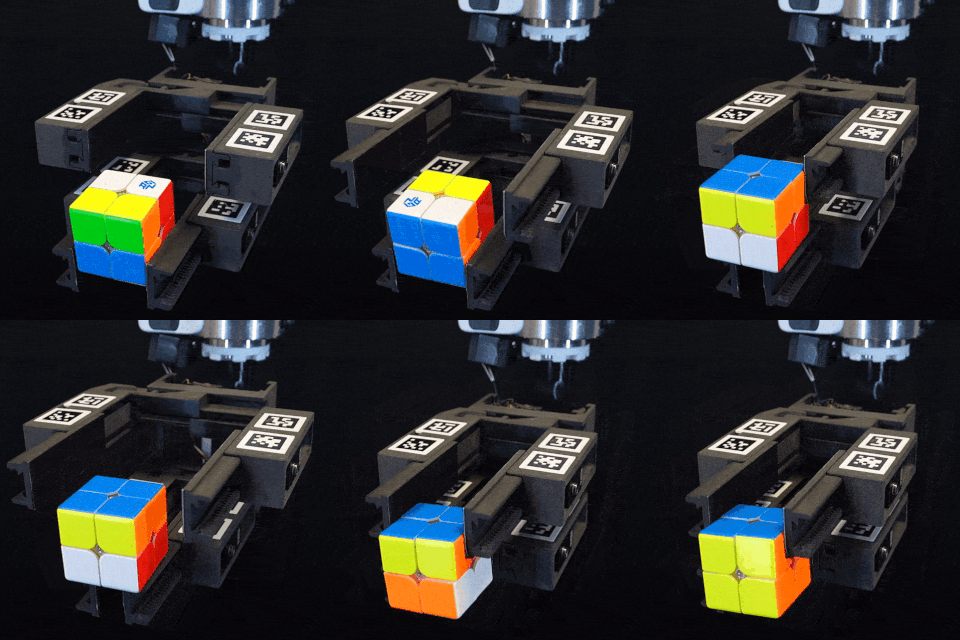
The Cartesian Hand: In-Hand Manipulation with All-Linear Fingers
arXiv preprint, 2026
PrecisionA 7-DoF hand that uses only linear joints. It opens caps, pipettes, and drives screws on 35 lab, factory, and household objects, and two of them do bimanual lab work on a humanoid.
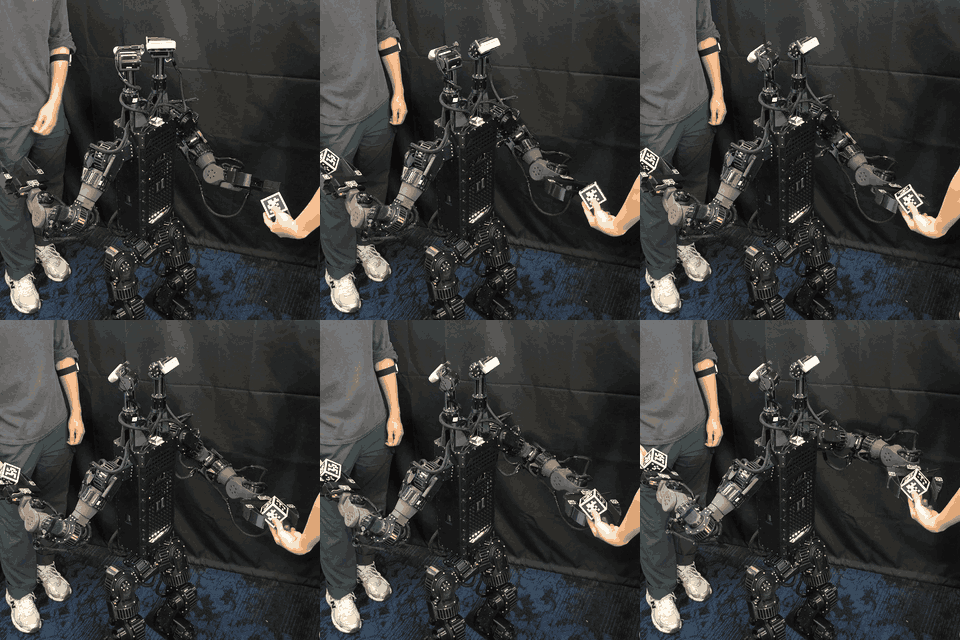
Visible-Reachable Workspace for Perception-Aware Humanoid Design
arXiv preprint, 2026
Perception for manipulationA 31-DoF humanoid whose two cameras move independently. It can see 97% of the space it can reach (38% with fixed cameras) and watch two separated targets while working on them.
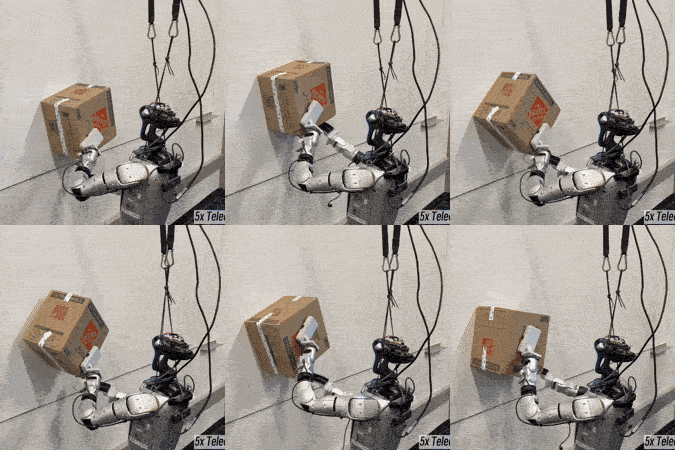
CEER: Compliant End-Effector and Root Control as a Unified Interface for Hierarchical Humanoid Loco-Manipulation
IROS 2026
Loco-manipulationA compliant end-effector and root control interface for hierarchical humanoid loco-manipulation.
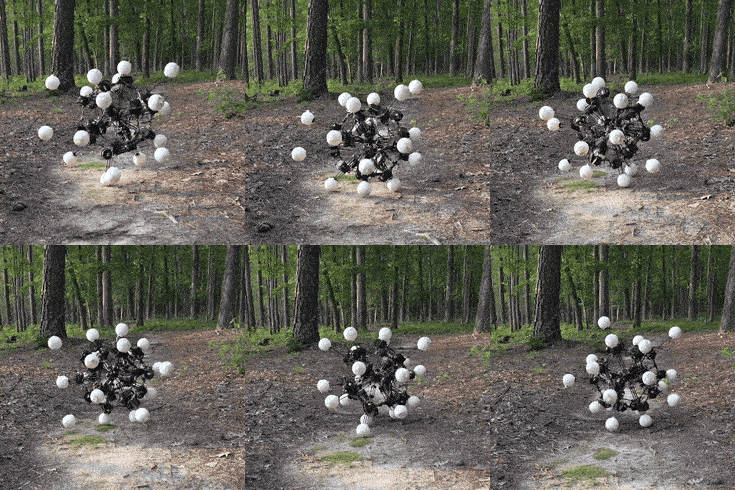
Extreme dynamic symmetry enables omnidirectional and multifunctional robots
Science Robotics, 2026
RobustnessA 20-legged spherical robot built on dynamic symmetry, a design principle we introduced. It moves in any orientation, keeps going with up to three legs disabled, and climbs between walls under emulated lunar gravity.
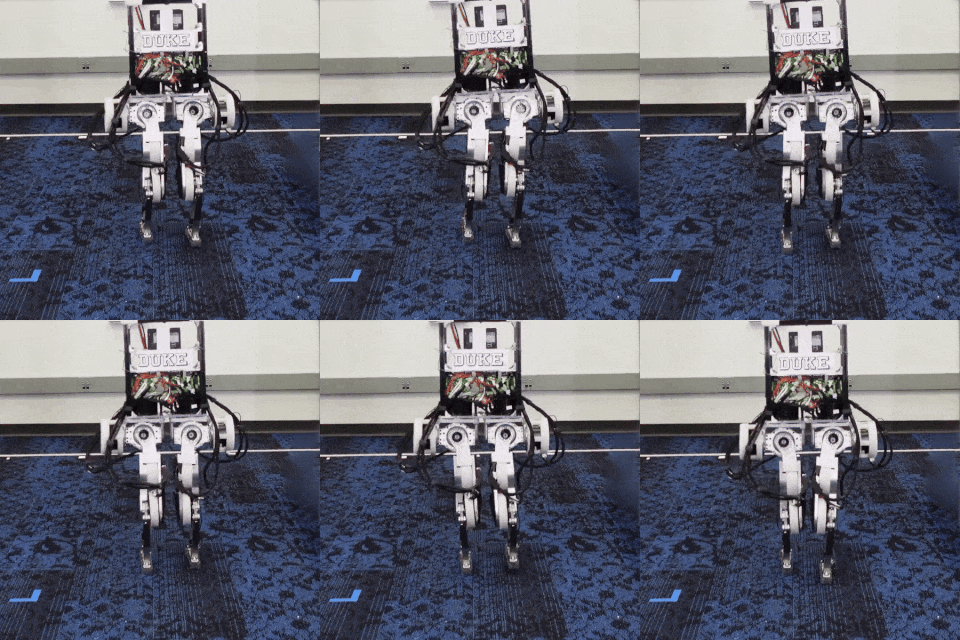
The Duke Humanoid: Design and control for energy-efficient bipedal locomotion using passive dynamics
IROS 2025
Sim-to-realAn open-source 10-DoF biped. Its RL policy, trained in simulation, runs zero-shot on the hardware and uses passive dynamics to cut the cost of transport by up to 31%.
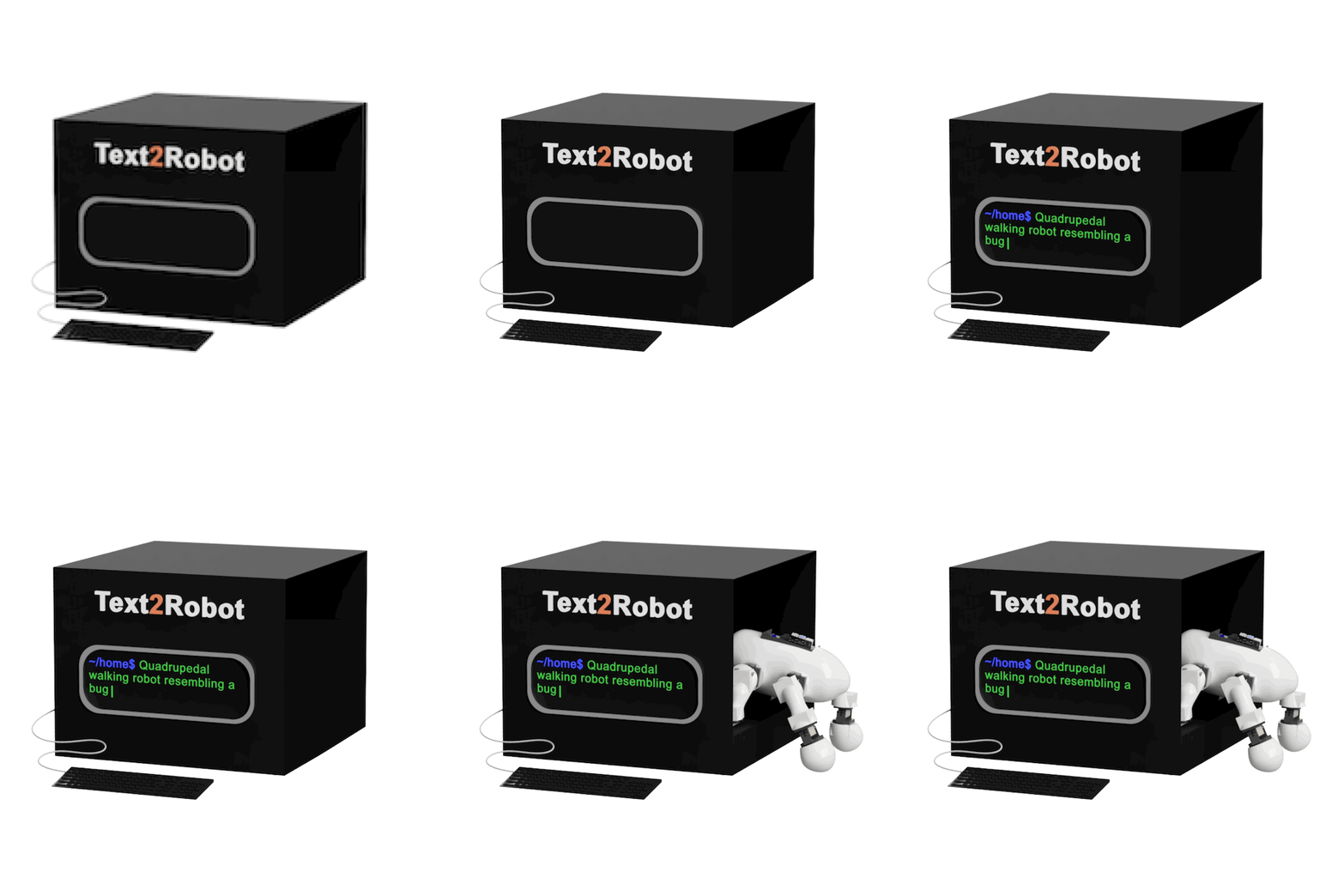
Text2Robot: Evolutionary robot design from text descriptions
ICRA 2025
ALIFE 2024 Innovation Award
Fast design iterationTurns a text prompt into a walking quadruped. My training pipeline learns a gait for each generated body in minutes.
A legged soft robot platform for dynamic locomotion
ICRA 2021
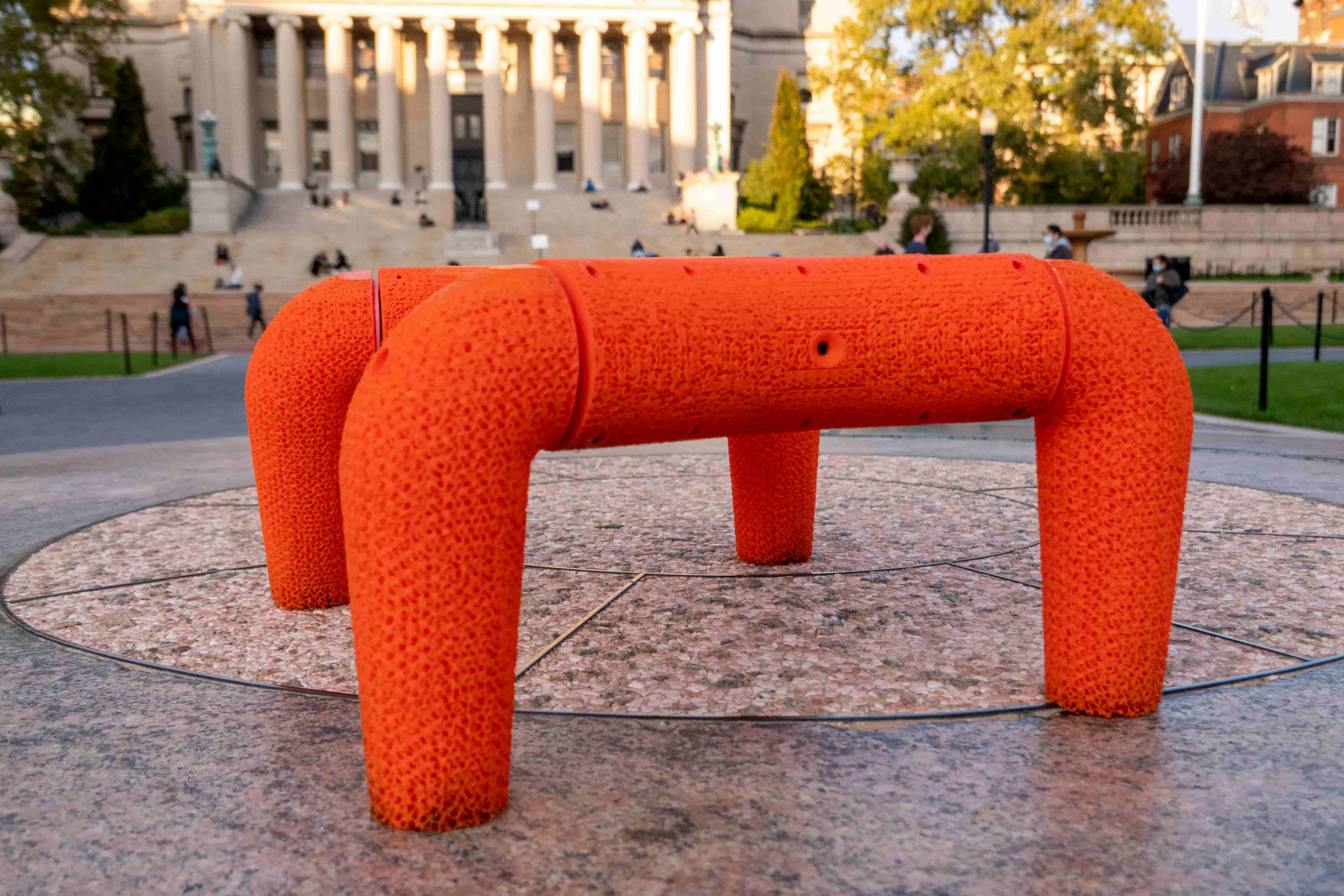
Soft robotsFlexipod, an untethered soft quadruped that runs at 0.9 m/s and does backflips, with gaits tuned in a CUDA soft-body simulator.
Earlier work: soft actuators and VR gait studies
- Improving the actuation speed and multi-cyclic actuation characteristics of silicone/ethanol soft actuators. Actuators, 2020, cover article
- Additive manufacturing of silicone composites for soft actuation. 3D Printing and Additive Manufacturing, 2019, cover article
- Development of a virtual floor maze test: effects of distal visual cues and correlations with executive function in healthy adults. IEEE Transactions on Neural Systems and Rehabilitation Engineering, 2019
- Conductive fabric heaters for heat-activated soft actuators. Actuators, 2019
- Gait adaptations during overground walking and multidirectional oscillations of the visual field in a virtual reality headset. Gait & Posture, 2019