Abstract
Robotic manipulation has increasingly pursued human-like dexterous hands with many articulated degrees of freedom, offering rich manipulation capabilities at the cost of mechanical and control complexity. At the other extreme, parallel grippers are simple and robust, but provide little ability to manipulate an object after grasping it. Operating articulated objects such as threaded containers, manufacturing tools, and laboratory instruments often requires a second gripper, an external fixture, or coordinated arm motion.
We introduce the Cartesian Hand, a 7-DoF end-effector that rethinks dexterous manipulation by combining independent grasping and relative manipulation within a single end-effector using only linear motion. Two independently actuated parallel grippers hold different parts of an object, while four translating fingertips generate relative motion between the grasped parts. Its configuration-independent fingertip kinematics allow manipulation to be composed from simple linear motion primitives. The Cartesian Hand is particularly suited to objects structured around common mechanisms such as threads, pivots, linear guides, plungers, and triggers.
We demonstrate cap opening and closing, pipetting, pumping, two-handle manipulation, screwdriving, trigger actuation, and in-grasp reorientation across 35 objects spanning laboratory, manufacturing, and household settings. The same manipulation procedures transfer from a fixed-base robot arm to a humanoid, where we demonstrate bimanual laboratory manipulation using two Cartesian Hands. These results show that versatile in-hand manipulation capability can emerge from a mechanically simple architecture when independent grasping and relative motion are designed directly into the end-effector.
Video
Overview
One continuous run: spray bottle, pipette, then centrifuge-tube cap. Closing a jaw pulls the trigger, the separation joint presses the plunger, and fingertip slides twist the cap.
| Specification | Value |
|---|---|
| Fingertip travel | 65 mm |
| Gripper and separation travel | 52 mm each |
| Joint speed | ≈ 60 mm/s |
| Static hold, one gripper | 2 kg |
| Mass | 850 g |
| Size | ≈ 166 × 100 × 76 mm |
| Structure | 3D-printed PLA or nylon |
| Cost | ≈ $500 |
Kinematics
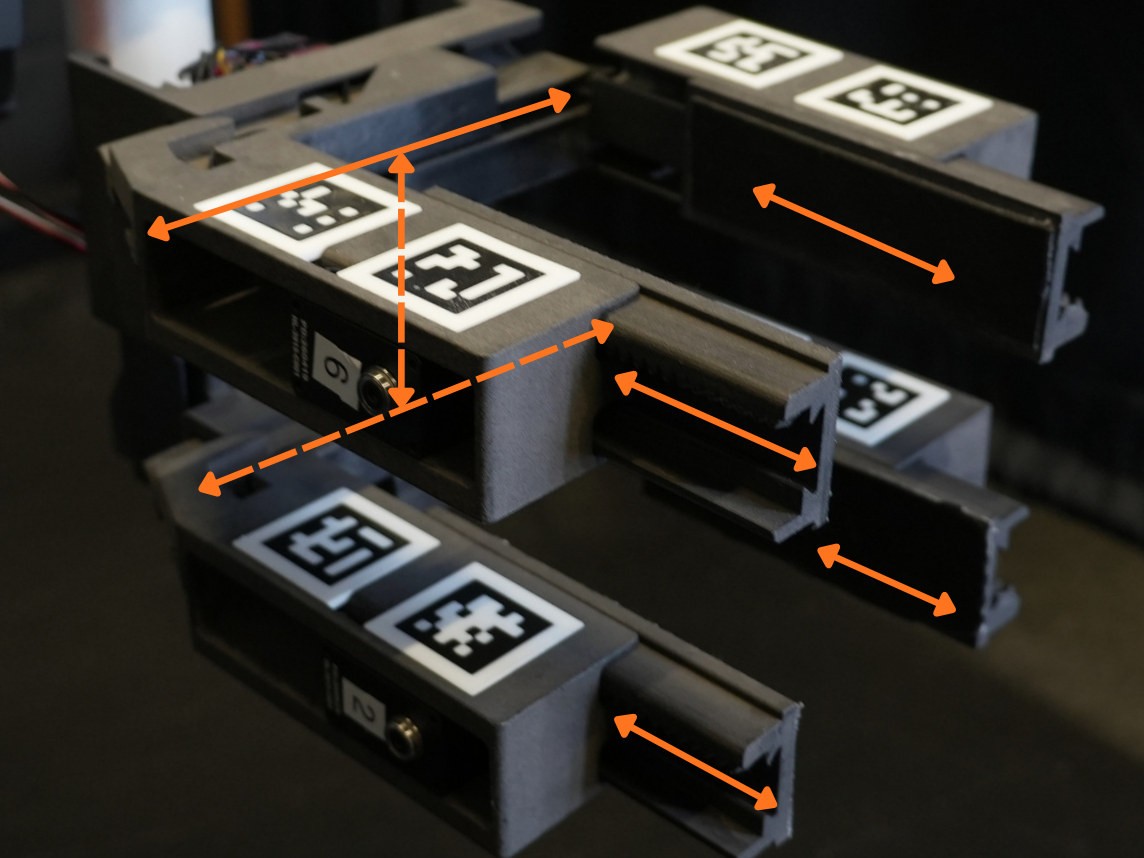
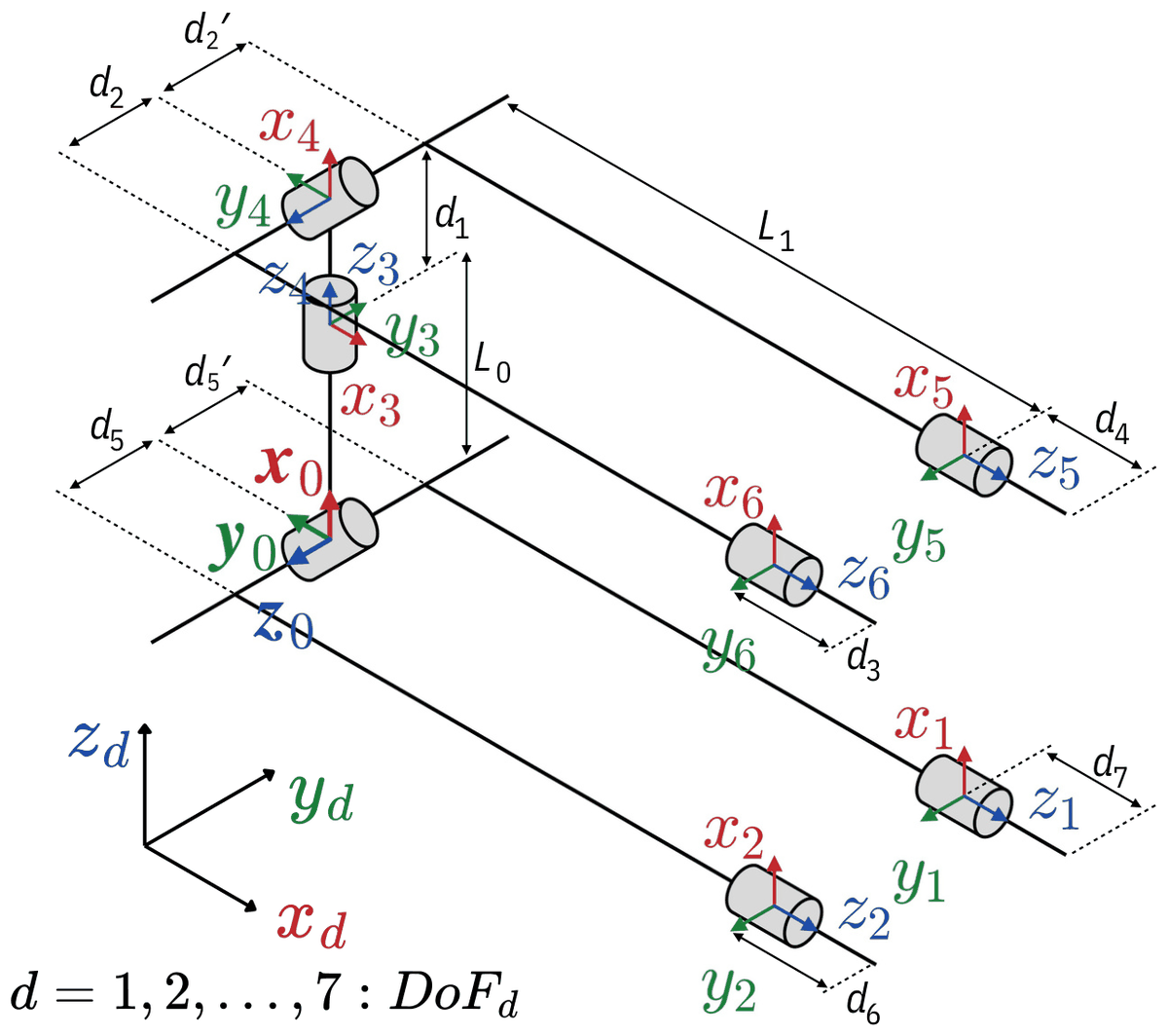
All seven joints are prismatic, so each joint moves its fingertips along a fixed axis, the same way in any configuration and with no singular poses. Each fingertip point is a fixed linear function of the joints, so the Jacobian is a constant matrix of full rank.
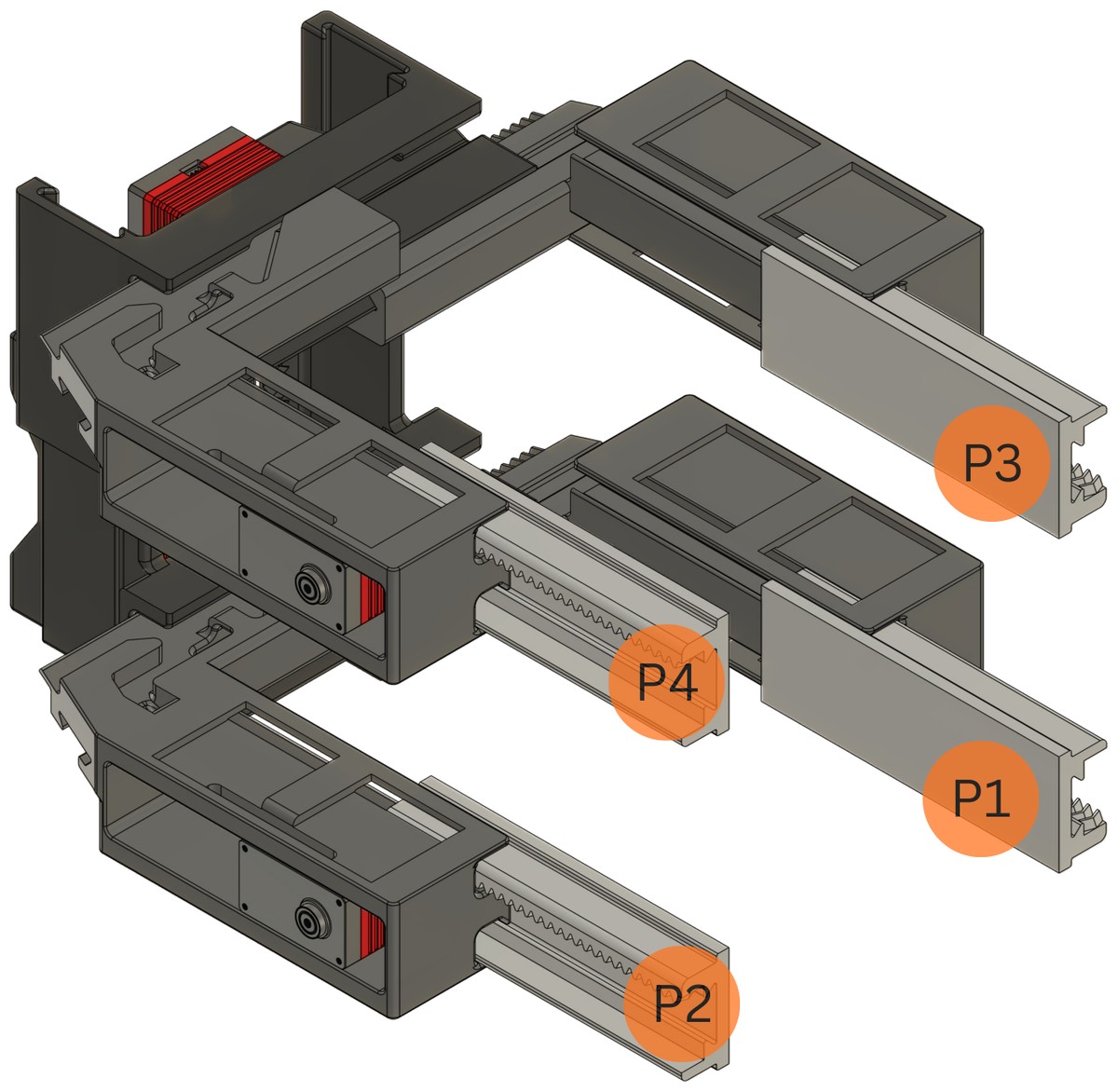
Design: four actuated fingertips, P1–P4
Joint frames: seven prismatic joints
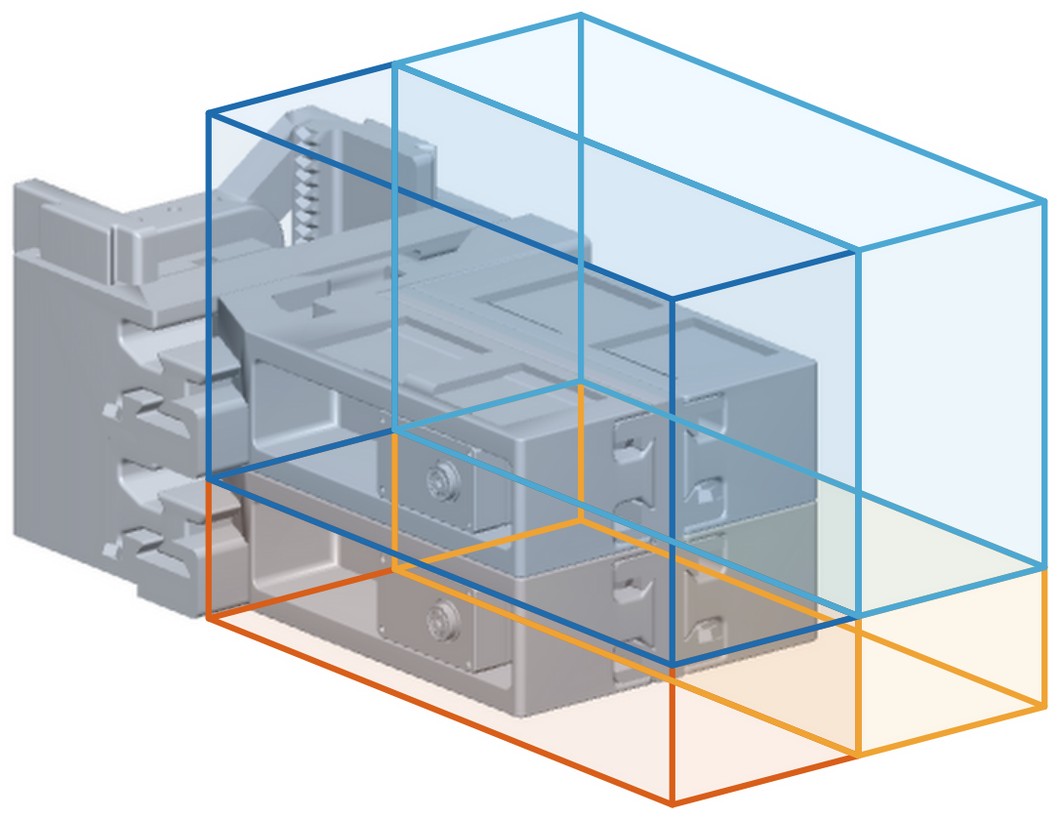
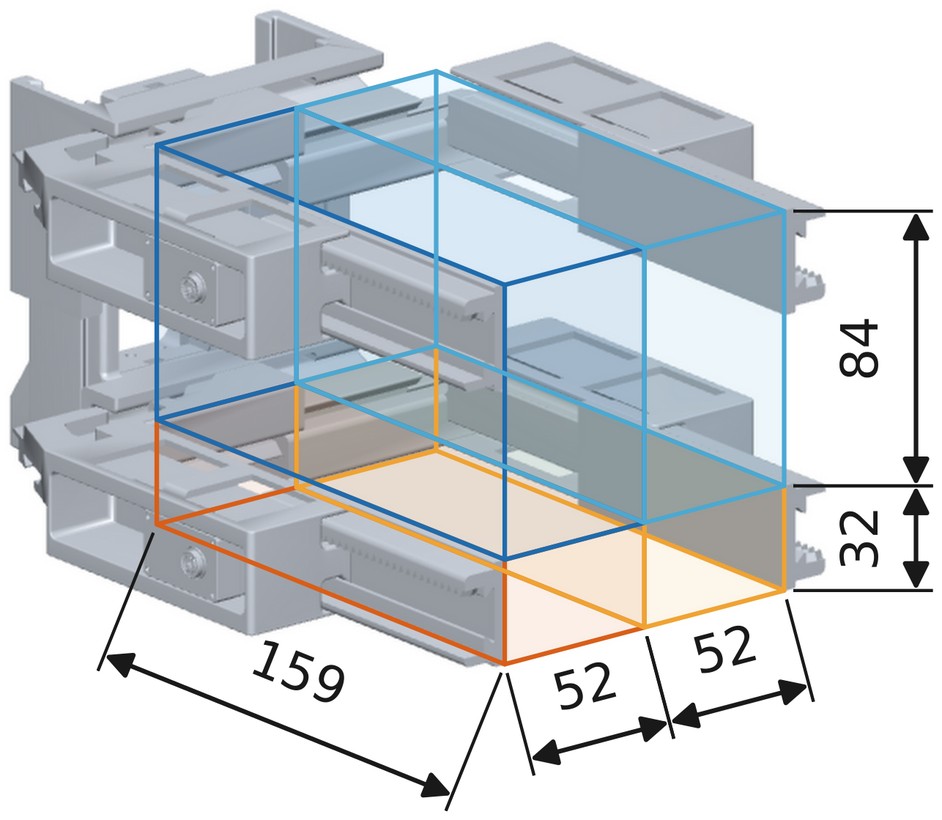
Workspace: each fingertip reaches an axis-aligned box (base gripper orange, auxiliary gripper blue).
Minimum configuration
Maximum configuration
Rubik’s Cube Manipulation
Within one grasp, the hand alternates between holding the cube, turning a layer and reorienting it.
On a Humanoid
Two Cartesian Hands on Duke Humanoid v2: one hand opens a centrifuge tube while the other pipettes into it. The arms position the objects; the hands perform each operation.
Links
Citation
| |