Abstract
Field robots must traverse varied terrain and obstacles while remaining robust to water, debris, vegetation, and physical contact. We present MARBLE, a fully enclosed omnidirectional amphibious rolling robot driven entirely by internal mass redistribution.
Three mutually orthogonal linear sliders shift internal masses to displace the center of mass and generate body rotation, while an orientation-aware controller maps planar velocity commands into slider positions as the body continuously reorients. A rigid spherical shell encloses all active mechanisms and simultaneously serves as the terrestrial contact surface, buoyant enclosure, and mounting structure for passive fins that enable water-surface propulsion. Rotation of the same shell produces rolling on land and surface propulsion in water without mechanical reconfiguration or separate locomotion actuators.
The spherical morphology further allows the robot to accommodate changes in body orientation and contact location during direct interactions with terrain and obstacles. We evaluate MARBLE through omnidirectional locomotion characterization, traversal across heterogeneous terrestrial environments, aquatic surface locomotion, land-water transitions, and deliberate obstacle interactions. These experiments demonstrate how a single enclosed mechanical architecture can combine omnidirectional mobility, cross-medium locomotion, and tolerance to environmental contact.
Video
Overview

Cross-Medium Amphibious Locomotion
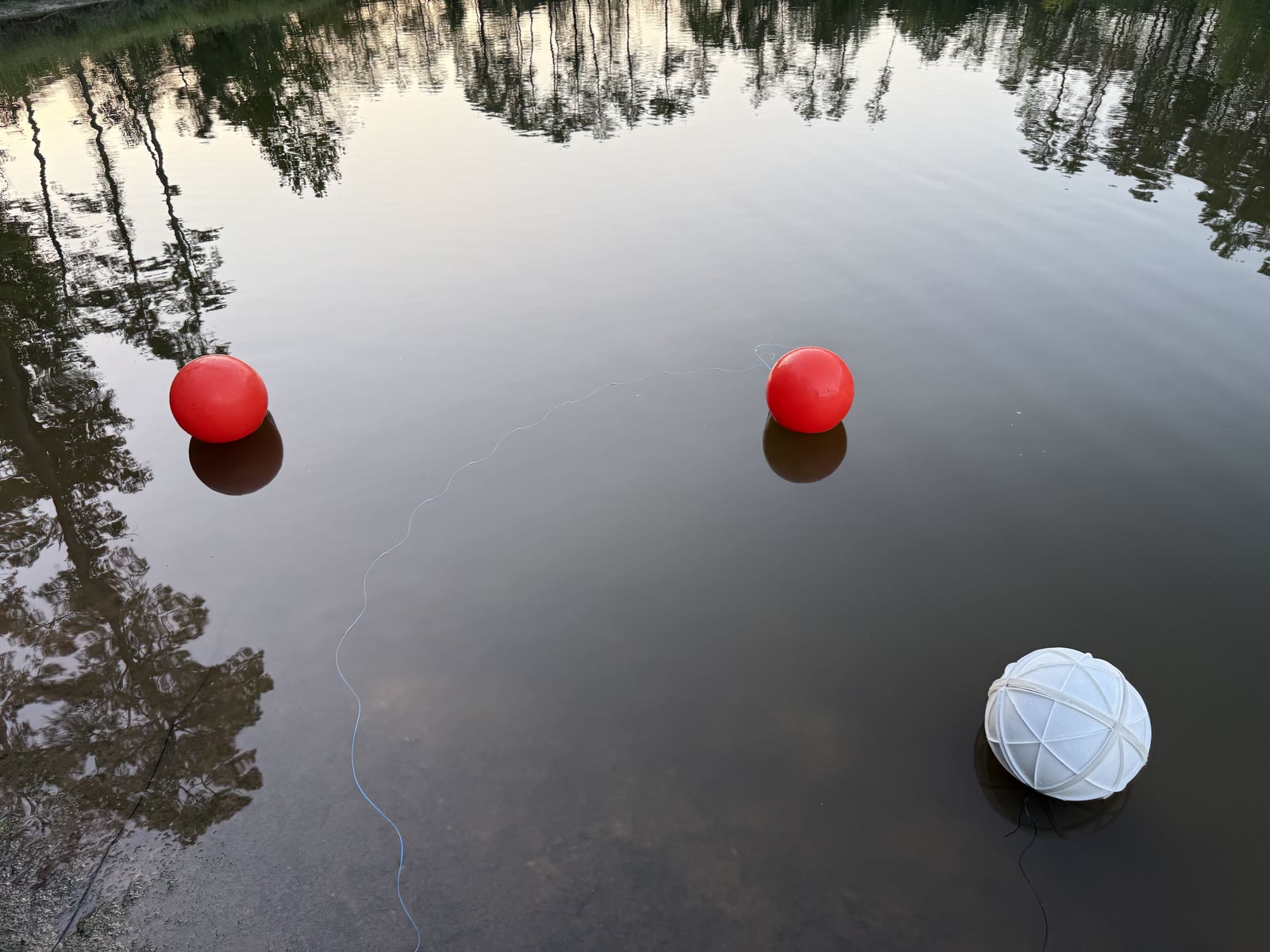
MARBLE navigates amphibious environments without hardware reconfiguration, using one locomotion system.
Terrestrial Rolling (1.5×)

Water-Surface Propulsion (2×)

Land-Water Transition (3×)

| Terrestrial | Aquatic | Transition | |
|---|---|---|---|
| Distance | 10.60 m | 5.24 m | 5.21 m |
| Mean speed | 0.745 ± 0.163 m/s | 0.375 ± 0.059 m/s | 0.215 ± 0.146 m/s |
| Max speed | 1.025 m/s | 0.488 m/s | 0.840 m/s |
Design
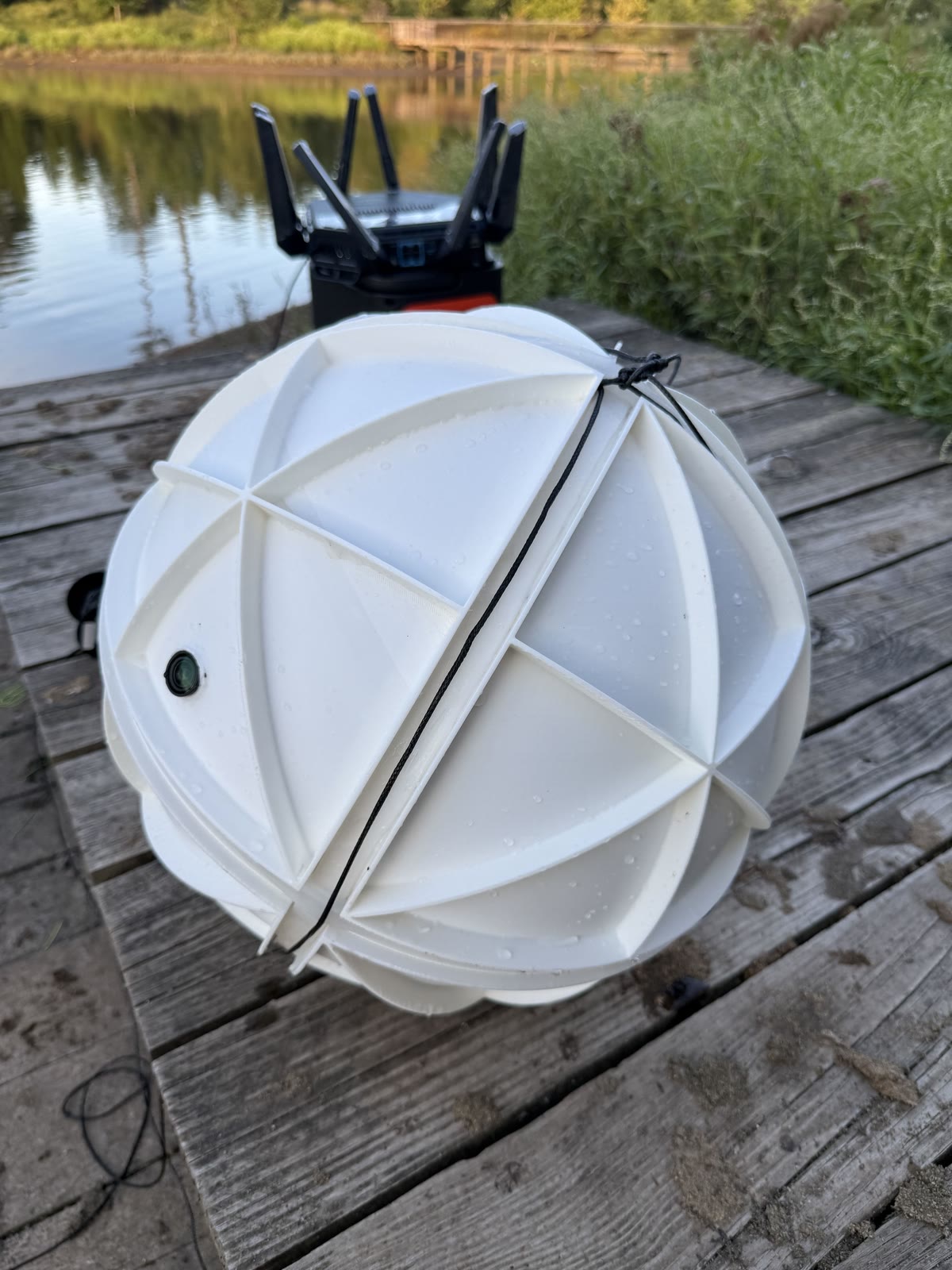
Three orthogonal mass sliders shift MARBLE’s center of mass to induce rolling. All active mechanisms are sealed inside the spherical shell.
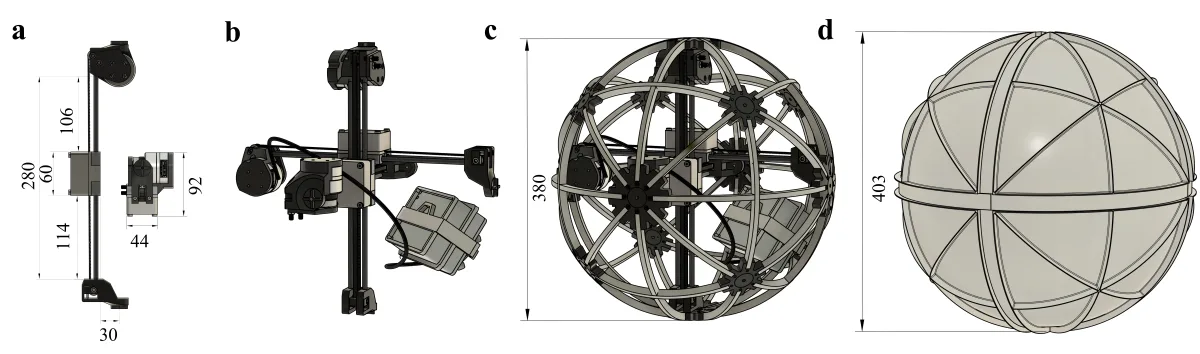
| Specification | Value |
|---|---|
| Outer diameter | 387 mm |
| Shell mass | 1.2 kg |
| Fin height | 8 mm |
| Mass sliders | 3 × 700 g |
| Slider stroke | 220 mm |
| Motors | CubeMars GL40 II |
| Position control | 100 Hz |
| Battery | 4S LiPo, 16 V |

Omnidirectional Velocity Characterization
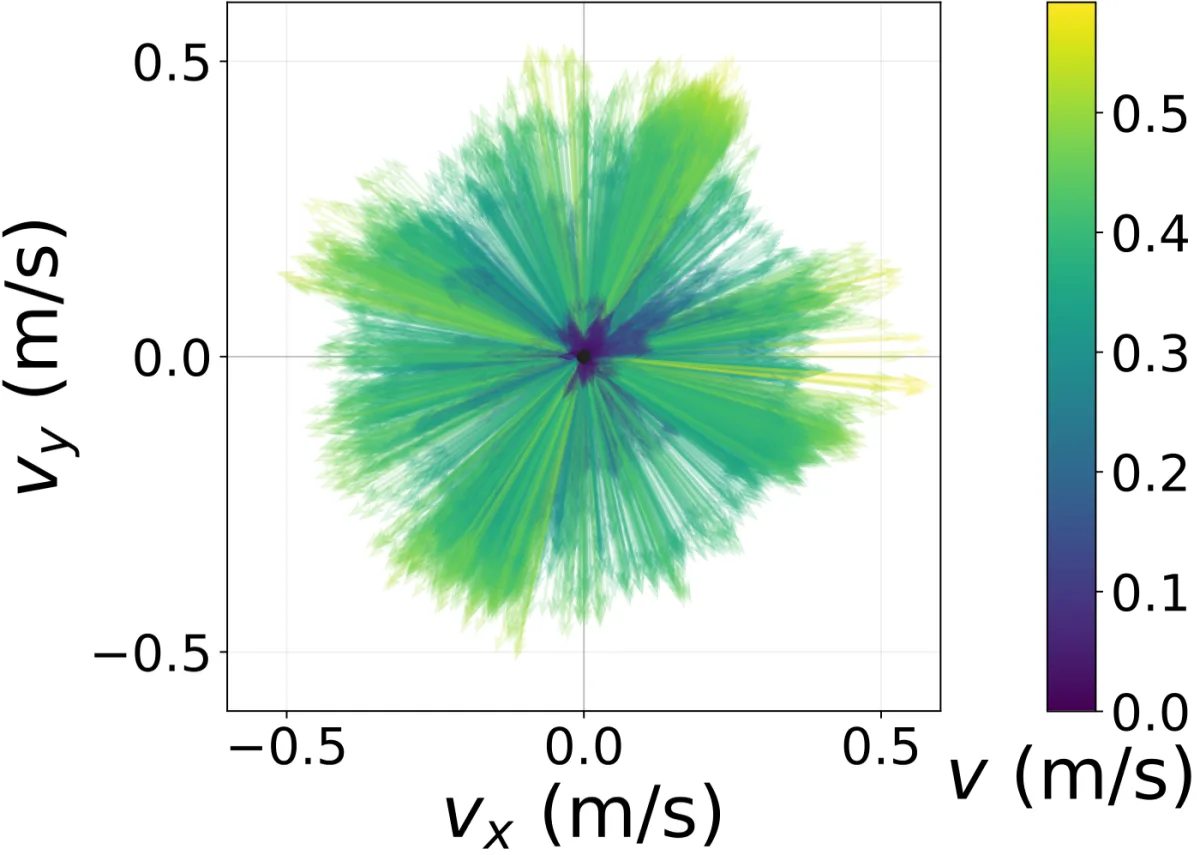
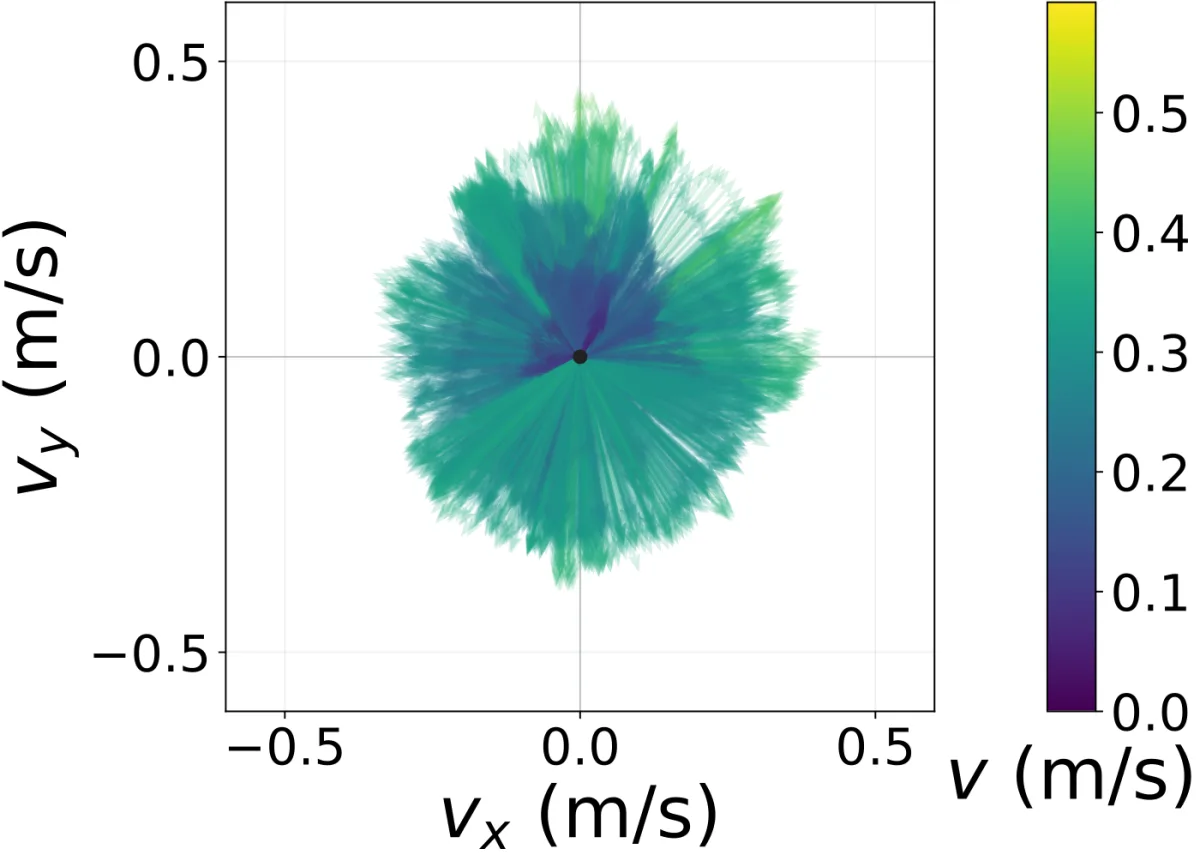
Geometric and learned controllers in MuJoCo, on ground and on water.

Measured velocity vectors on hardware under joystick commands (7,568 samples each). The learned controller reaches 0.348 m/s mean speed versus 0.252 m/s for the geometric controller.
Learned Controller
Geometric Controller
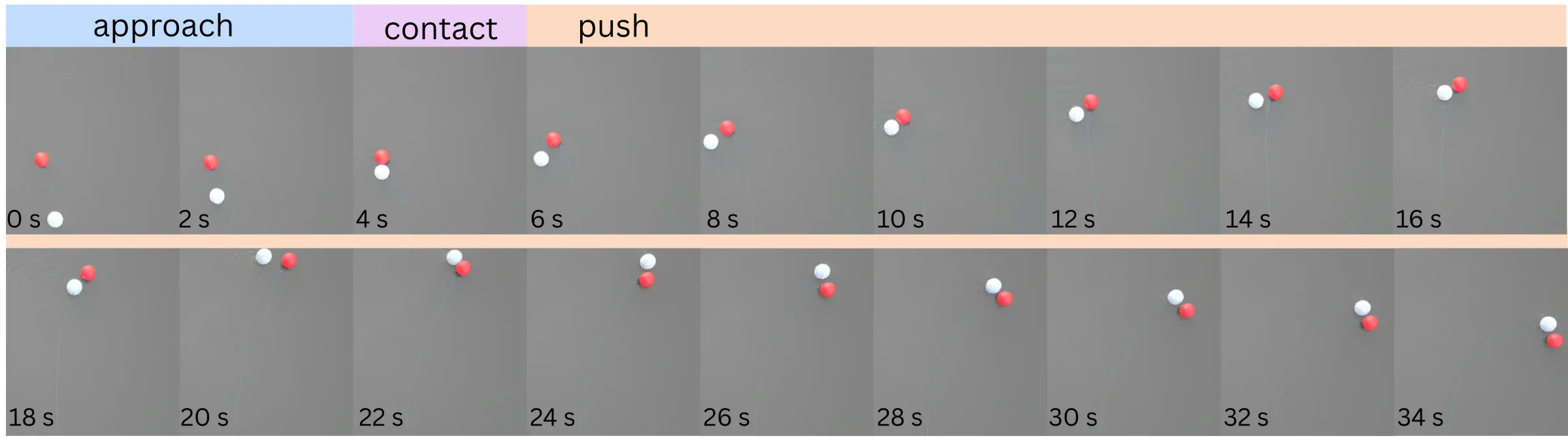
Obstacle Interaction
The enclosed actuation makes MARBLE contact-tolerant: it can push against obstacles with its shell without exposing any mechanism.

Photos
Links
Citation
| |